See Task Raising
Online Assistant, email, QR & IoT-powered task creation

A dripping tap, a broken lamp, air conditioning that won't cool a room, none of these are emergencies, but they all shape whether a guest comes back.
Right now that report probably starts with a phone call to the front desk, gets relayed by radio to engineering, and never quite makes it into a system either department can see. askporter Operations gives front desk, housekeeping and engineering one accountable trail for every guest-impacting issue. So issues get resolved faster.
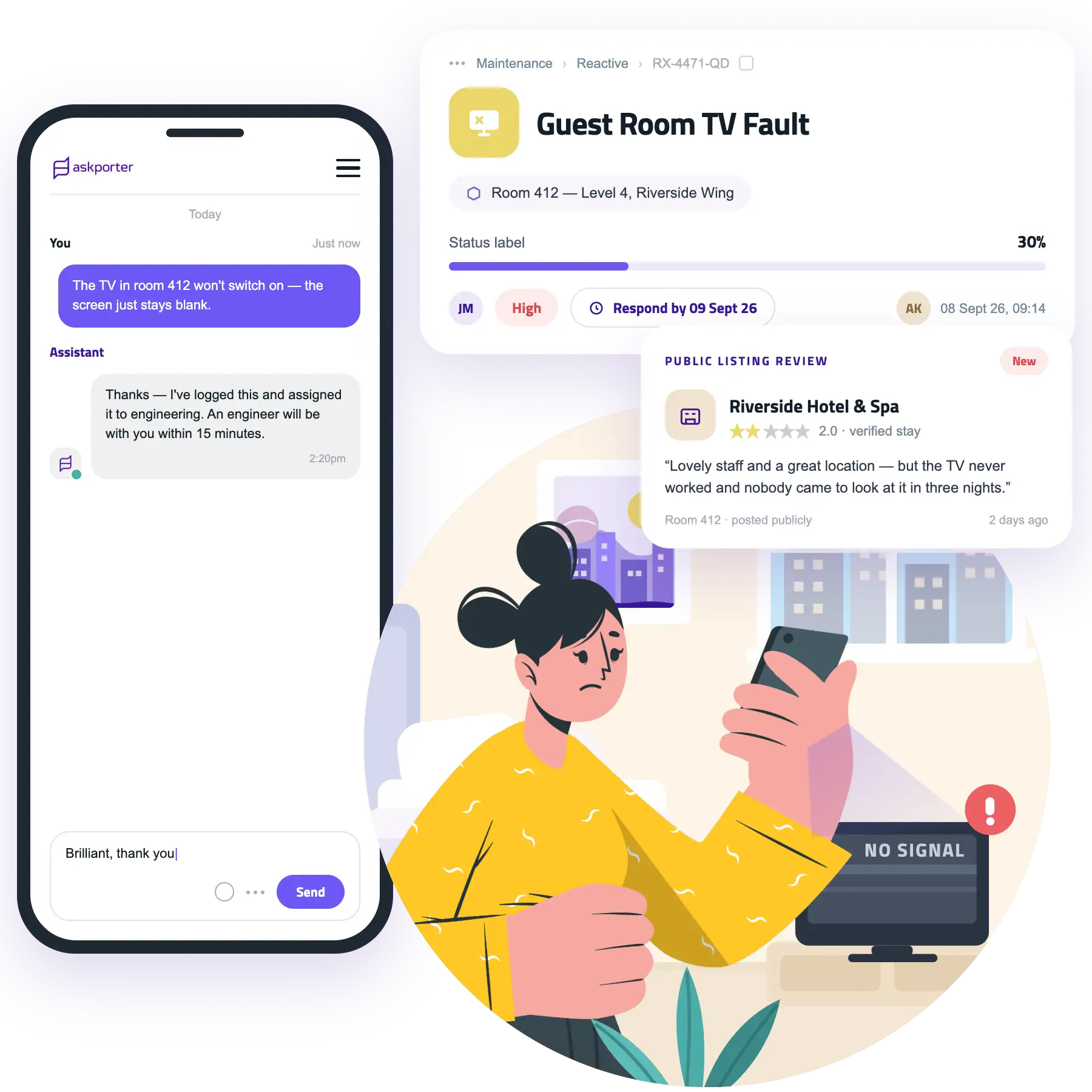
A guest-reported issue in a hotel usually starts at the front desk or through housekeeping, gets relayed to engineering by phone or radio, and rarely ends up documented anywhere either department can check later. Nobody's hiding the status, there just isn't one connected record, so "has this been fixed?" means someone has to go and ask. The system underneath is typically the Property Management System stretched to do a job it was never built for, plus phone, radio and WhatsApp between departments.
94%
43.8%

First to hear about a guest-reported issue. Needs to log it in seconds, without leaving a guest waiting at the desk.
Wants visibility on progress and missed tasks in one glance, rather than chasing status across separate systems and a phone line.
Signs off the budget and answers for guest satisfaction scores under scrutiny.
Compares performance across properties and asks how anything new fits alongside the PMS.
One platform every department already knows how to use, from the front desk to the general manager.
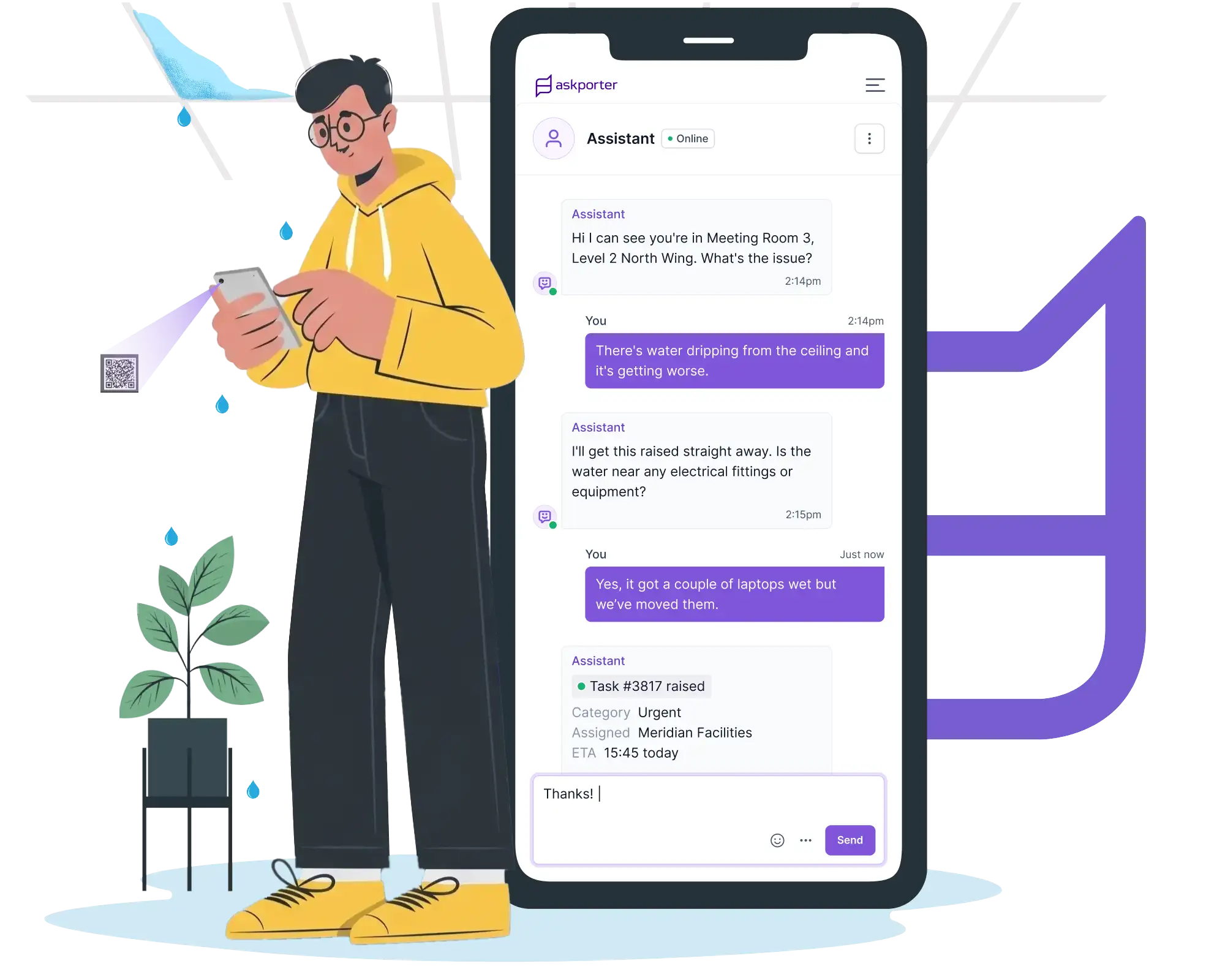
A guest scans a QR code in-room to report a fault, or front desk logs it on their behalf in seconds. Every report is triaged and linked to the right room and asset, ready for assignment, without a radio call to engineering and a hope it gets through.
Multiple reporting channels: online assistant, WhatsApp, email, or a QR code at the point of the issue.
Asset & Location Intelligence: each task linked automatically to the right room, floor and asset.
Self-Help & Triage: minor issues get a suggested fix before a job is even raised.
CAFM Integration: where a facilities or hospitality operations system is already in place, tasks sync straight through.
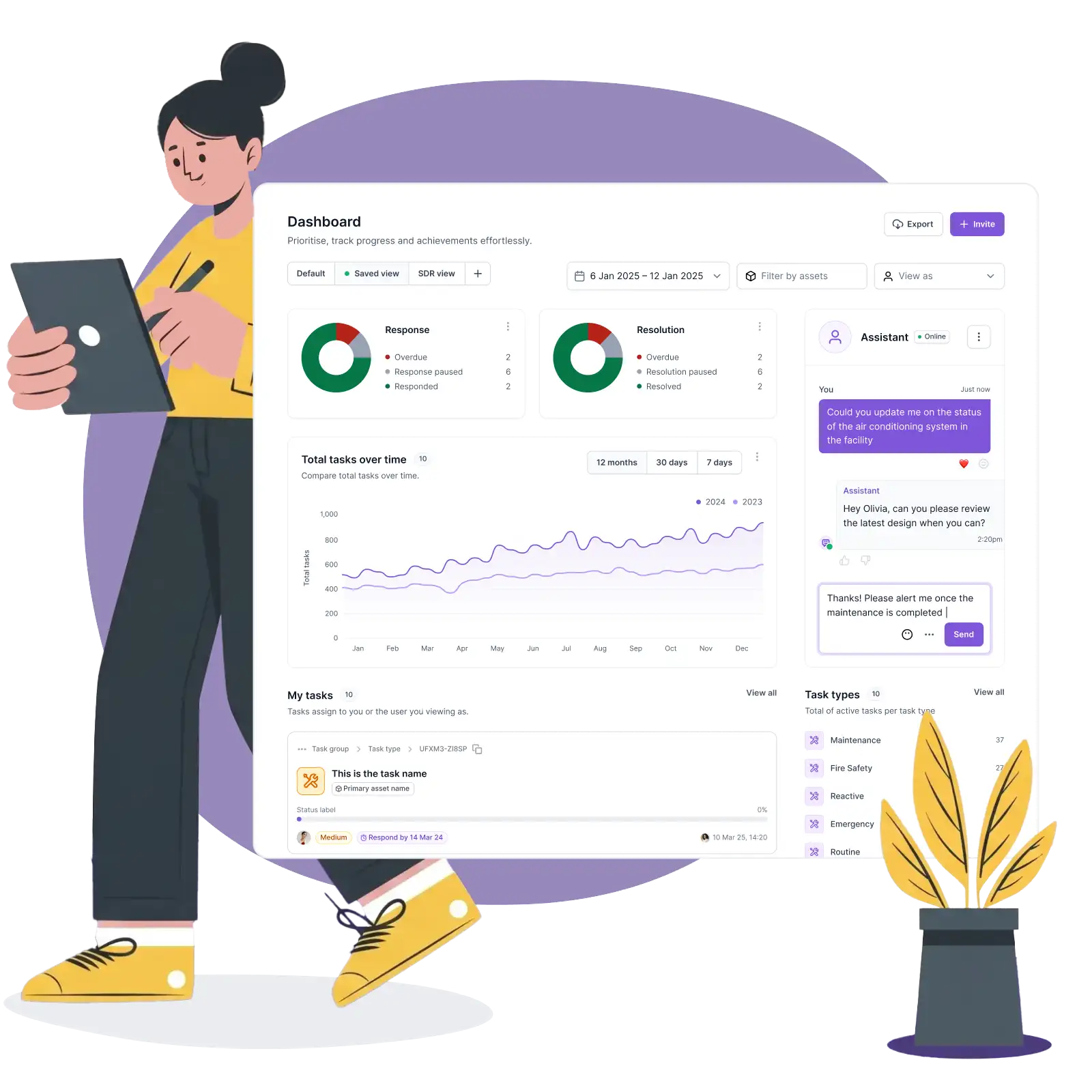
SLAs are configured per category, per room type, per team, so a guest-facing fault and a back-of-house repair don't share the same clock. A single dashboard shows every open, in-progress and closed job across the property. When a job is heading for breach, the escalation fires automatically.
SLA Management: response and resolution targets by category, building and asset, with automatic escalation.
Task Assignment: route to the right in-house team or external contractor in one motion.
Task Management: one dashboard for every job across the property, or every property in a portfolio.
Work Orders & Quotes: raised and approved through your rules.
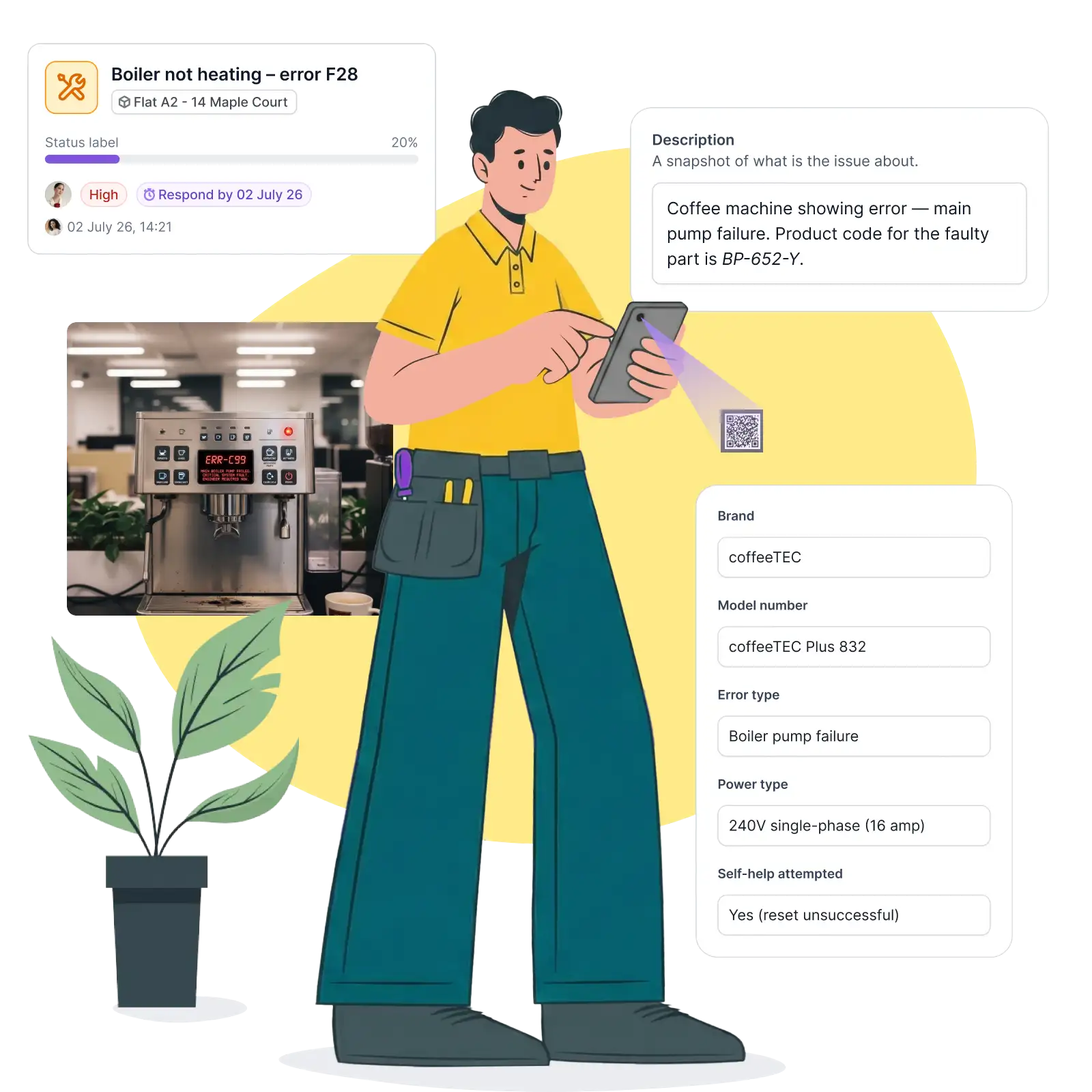
An engineer checks in by QR code at the asset, sees the job brief and any access notes, and completes the fix. Before-and-after photos attach directly to the record, so a room can be released back to housekeeping on evidence, not just a verbal "it's done."
Operative Job Management: full job brief and asset history delivered on check-in via QR code or web link.
Photo Capture & Evidence: before-and-after photos timestamped against the job.
Supplier Assignment: assign external contractors inside the same flow as in-house teams.
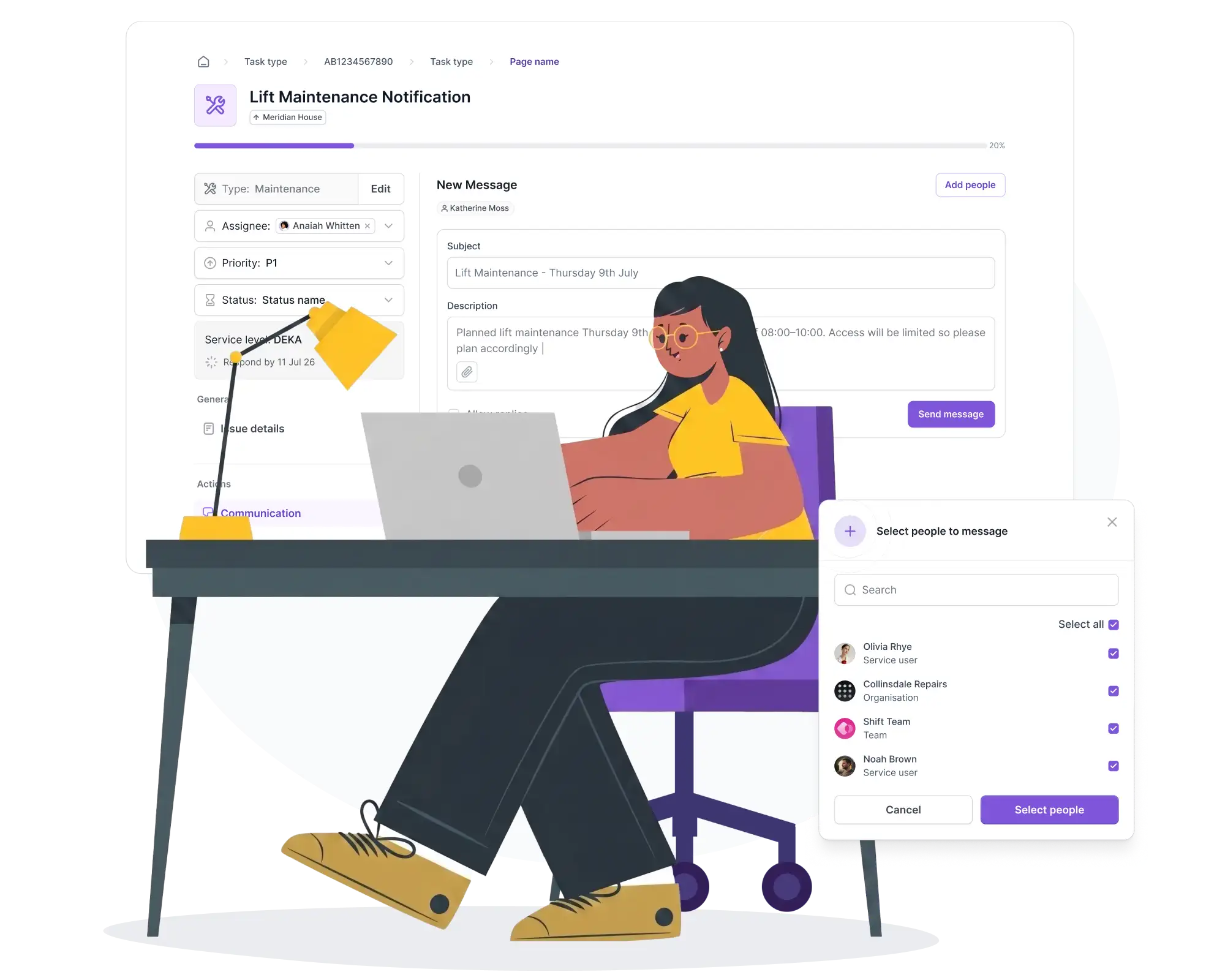
Planned maintenance and compliance campaigns, fire safety checks and PPM windows, go out to the right team with a dated record, timed against occupancy patterns rather than clashing with a guest's stay.
Planned Maintenance Notices: advance notice to occupants, with rescheduling options before the day.
Compliance & Safety Outreach: campaigns delivered by building and audience, with a full record.
Client Satisfaction Surveys: automated feedback, attributed back to building and team.
A guest scans a QR code in-room to flag a fault, air conditioning, a light, a tap. It's triaged and routed to engineering immediately, with the room and asset already identified.
Front desk logs a guest complaint at check-in. Engineering sees it immediately, with priority reflecting guest impact, rather than waiting for a shift handover conversation to surface it.
Planned maintenance on shared plant or room assets is scheduled against occupancy patterns, so routine work doesn't collide with a busy check-in day.
Ahead of a morning operations meeting, the facilities lead doesn't need to chase status from three departments separately. One dashboard already shows open jobs, SLA position and anything trending toward breach.

Hospitality properties run reservations, rates and guest records through a Property Management System, and anything new has to earn its place alongside it rather than duplicate it. askporter Operations sits next to the PMS and owns the maintenance and facilities trail: the report, the triage, the SLA clock, the assignment, the evidence, and the record of what happened, the part a reservations system typically doesn't handle well. What integration looks like for a specific PMS is a technical conversation we'd rather have properly than promise loosely.
Fifteen minutes is enough to see how every guest-reported issue, job and room check lands in one accountable trail.


Best FM & Housing AI Platform

PropTech Innovation
Best Repairs & Maintenance

UK government-backed · externally audited

UK data residency by default

Documented data processing · DPA on request

AI governance framework · 2024 legislation
Best FM & Housing AI Platform
PropTech Innovation
Best Repairs & Maintenance
UK government-backed · externally audited
UK data residency by default
Documented data processing · DPA on request
AI governance framework · 2024 legislation