See Resident Engagement
Reduce inbound demand with omnichannel AI

Students want repairs sorted fast, and manage their own living space, with minimal contact with the office. askporter Housing gives students a way to self-serve the routine, gives your team one system of record for the rest, and gives you the proof of scale to back the renewal conversation.
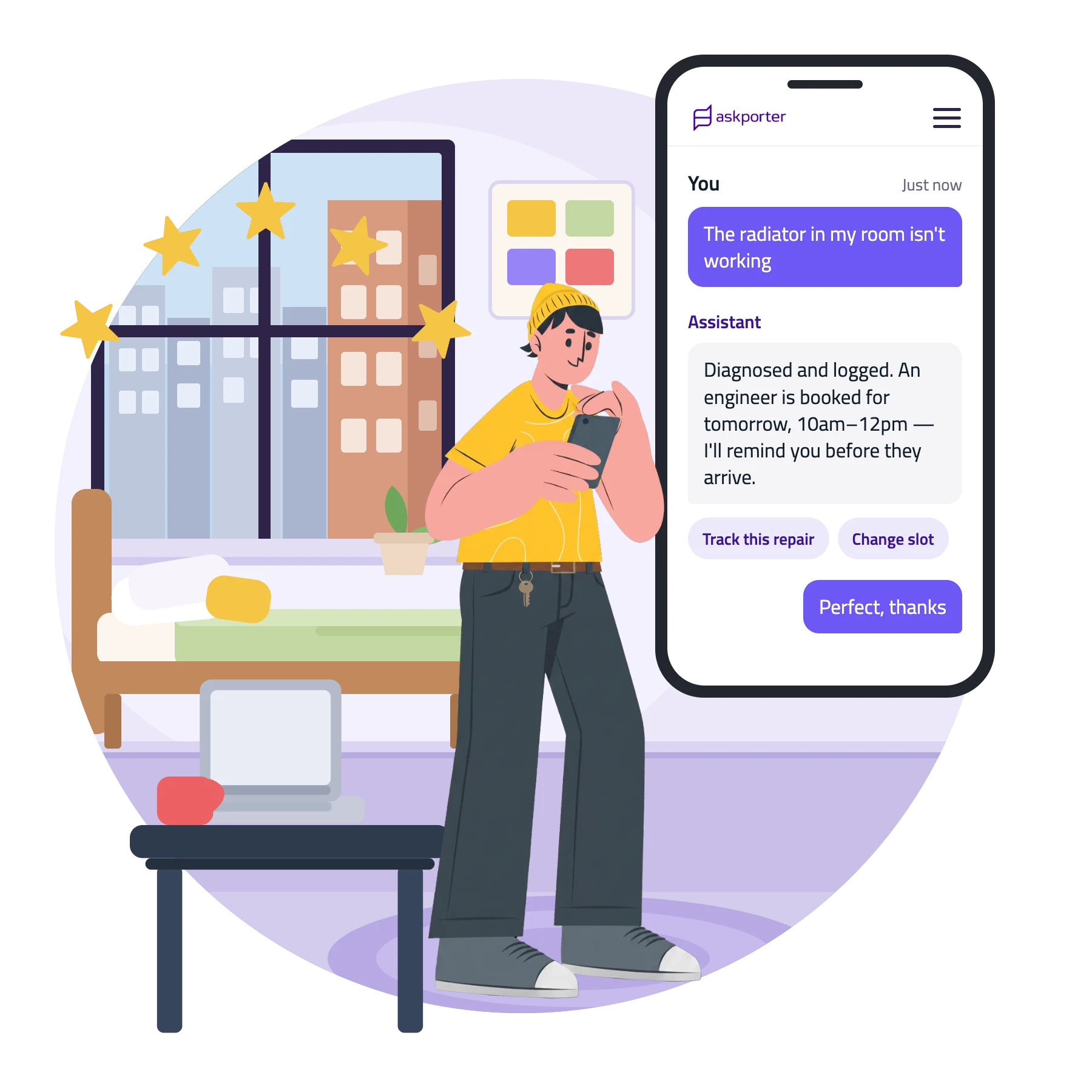
What operators ask for is consistent: an automated system that lets students raise their own tasks and manage their own living space, without a call to the office for something routine. What actually happens is different. Students don't always know how to use their boiler, or where an asset is located in a property they've lived in for six weeks, so the call comes anyway, usually to reception or the out-of-hours line, and someone still has to work out where the fault actually is.
The system underneath it is often an in-house tool, or a small, capable-looking system that becomes unwieldy the moment it's run at real capacity: a few hundred beds at move-in, a maintenance backlog at the end of exam season, a fire door inspection across every block at once. Operators want to be forward thinking, with minimal touch points, for a population that wants to feel free but also puts higher than normal footfall and usage on every component in the building. The platform has to manage both at once: independence for the student, and oversight for the operator.
97%
4.7
500,000+

Want to raise their own issue and manage their own living space, on their own channel, without a trip to reception or a form to fill in.
Front of house, day to day. Needs every reported issue in one place, whoever raised it and whichever building it's in, without a shift spent relaying messages.
Need visibility of welfare-relevant reports and check-ins alongside routine repairs, not a separate system to monitor.
The commercial owner of the accommodation contract. Wants proof of scale and time saved across every site, not a site-by-site spreadsheet.
One platform your building teams already know how to use, from a student's first message to a signed-off repair.
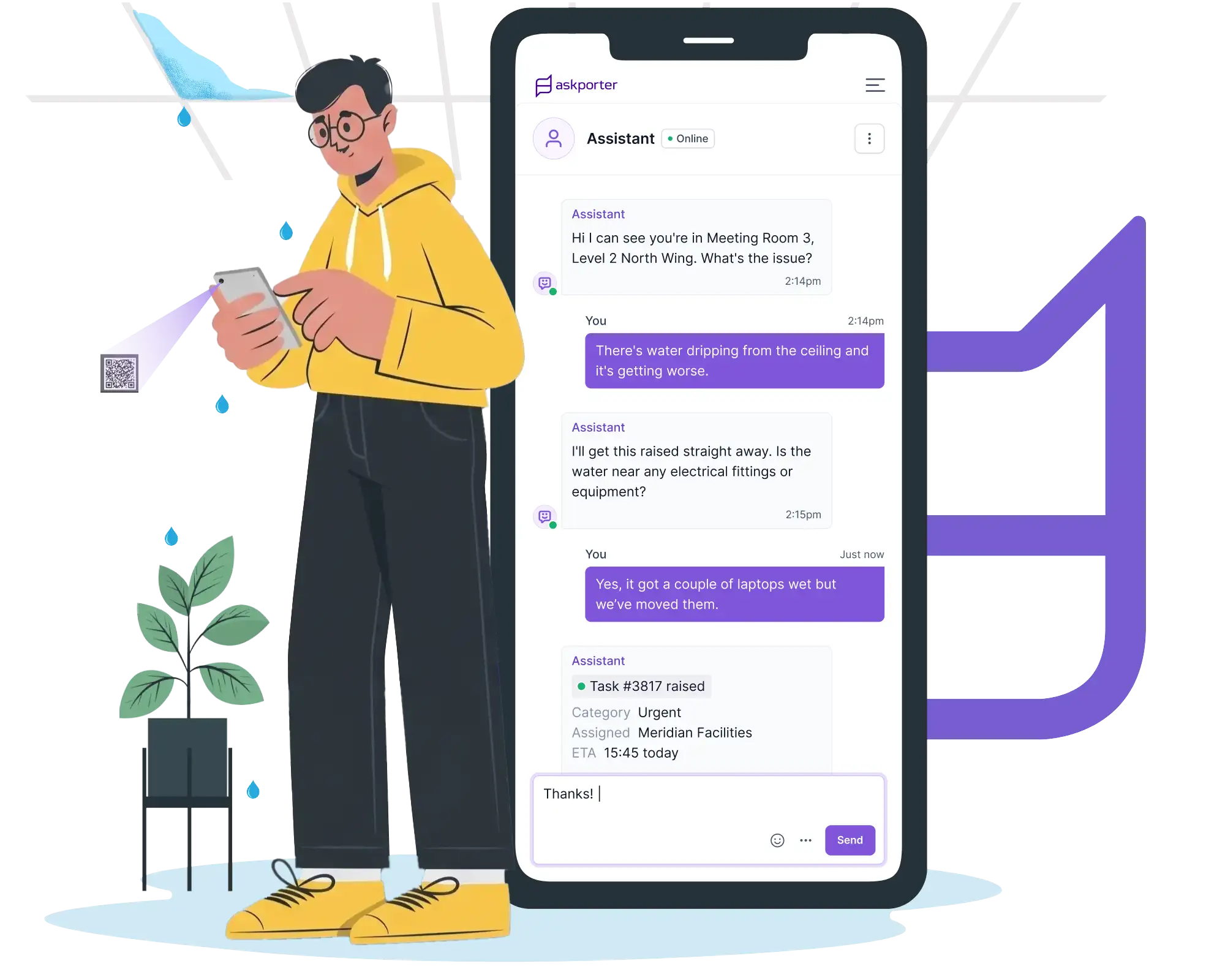
Students message on WhatsApp, email, web or phone, whichever channel they already use. askporter answers, triages the enquiry and confirms what happens next. Routine questions, bin day, parcel collection, a tenancy date, resolve themselves; only the exceptions reach your team. That's the minimal-touch-point experience students say they want, delivered without your team fielding every message personally.
24/7 Resident Support: any hour, any channel, no app or portal login required.
Tenancy & Property Guidance: routine questions answered instantly, freeing staff for the cases that need a person.
Maintenance Triage & Self-Help: guided self-resolution before a job is even raised.
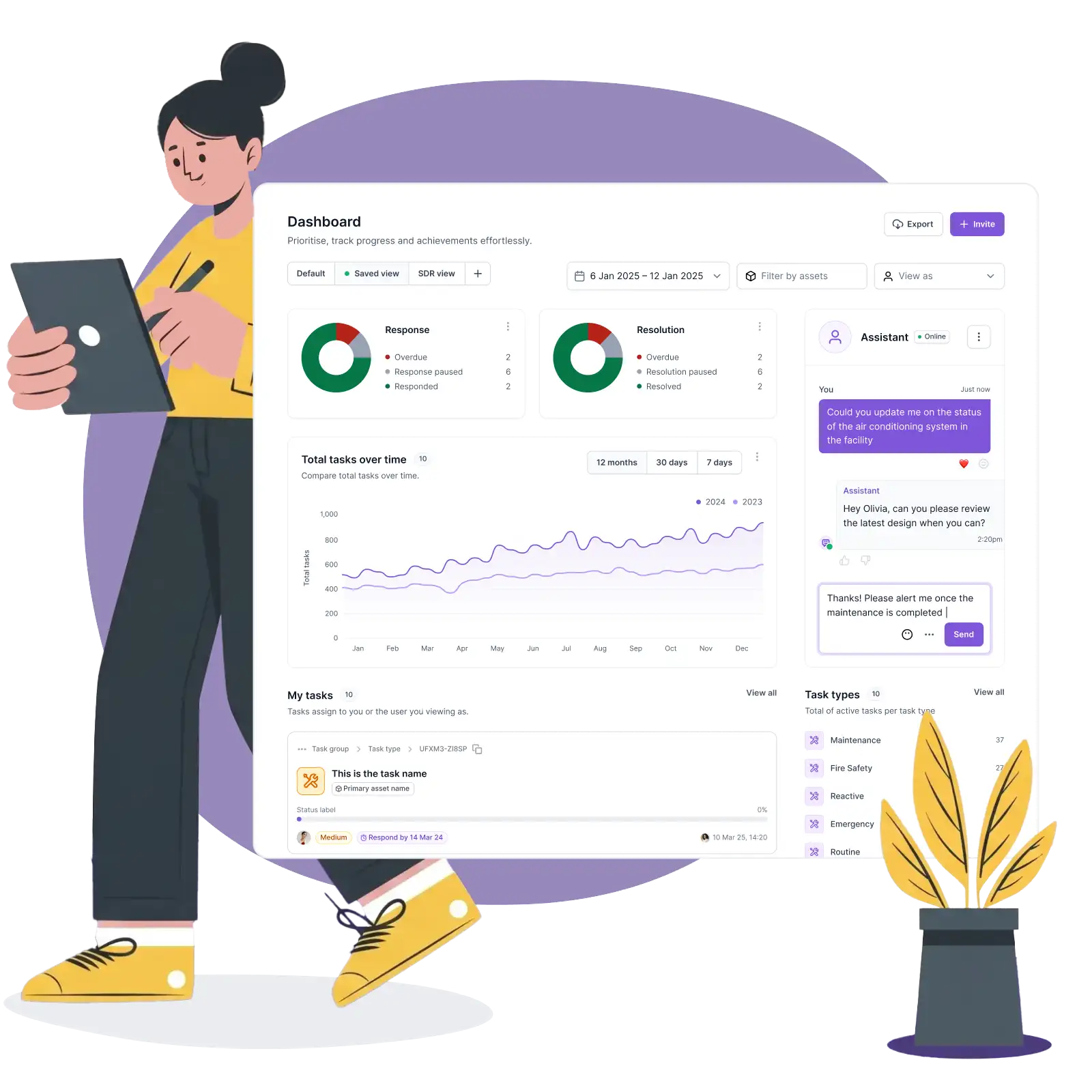
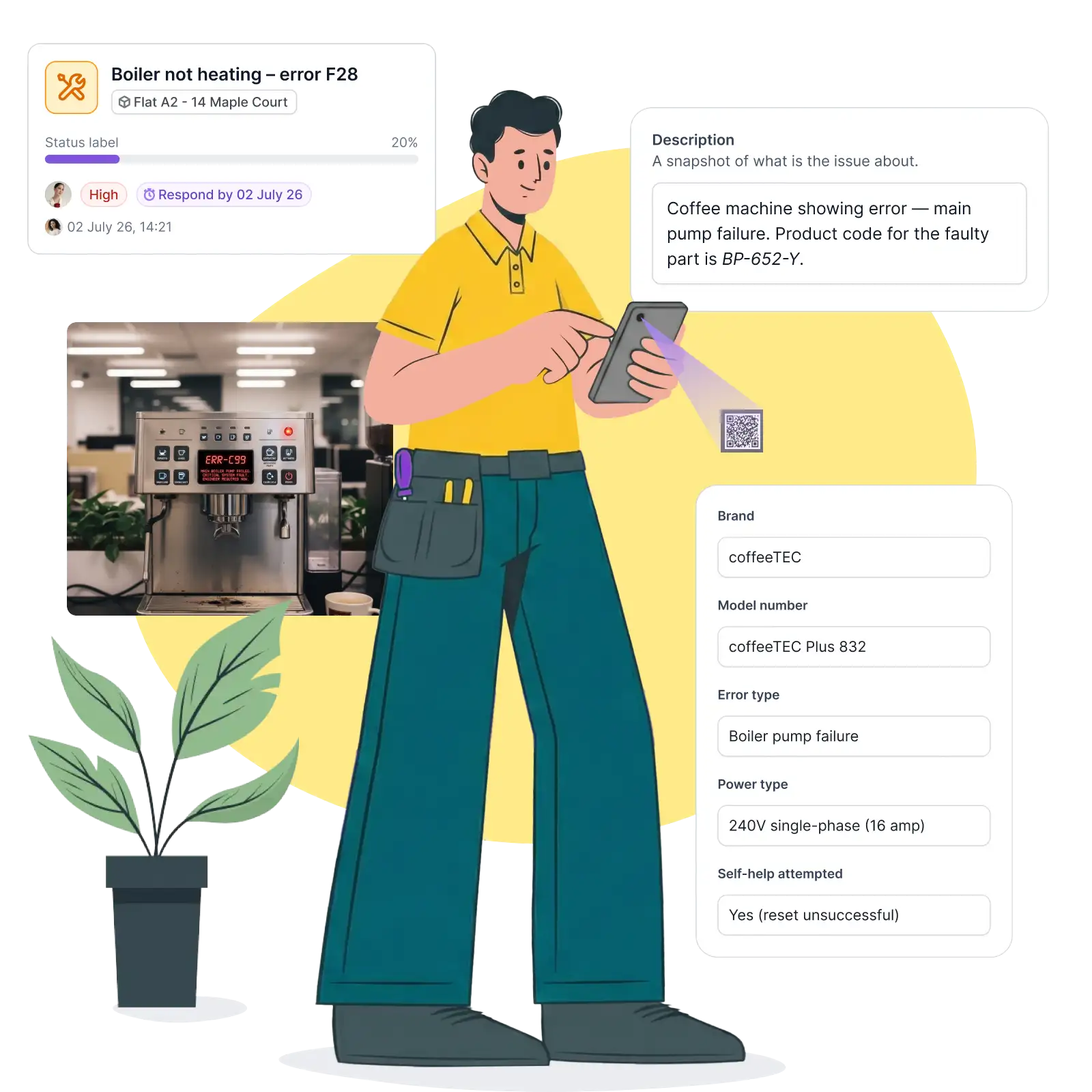
A student reports a fault from their phone, with a photo if it helps. askporter identifies the building, flat and asset automatically, so nobody has to ask "which block are you in?" Straightforward faults get a guided fix, a boiler reset, a fuse location, before a job is even logged. Everything else is triaged, matched to the right contractor, and dispatched, evidenced from report to close.
Smart Task Raising: reported once, in the student's own words, structured automatically.
Workflow Automation: triage and dispatch without manual re-keying.
Access & Appointment Management: appointments that work around lecture timetables and term dates.
Appointment & Repair Notifications: students told what's happening, not left to chase it.
Move-in surveys, welfare check-ins and safety campaigns, fire door checks, gas safety reminders, run through the same platform as the reactive repairs. This isn't the entry point for most PBSA operators, but the data already lives in one place when you're ready to use it, so welfare and compliance outreach never need a bolted-on second system.
Welfare & Wellbeing Check-ins: proactive outreach at the points in the year that matter: move-in, exam season, end of term.
Compliance Outreach: safety and access campaigns delivered by building, with a dated record.
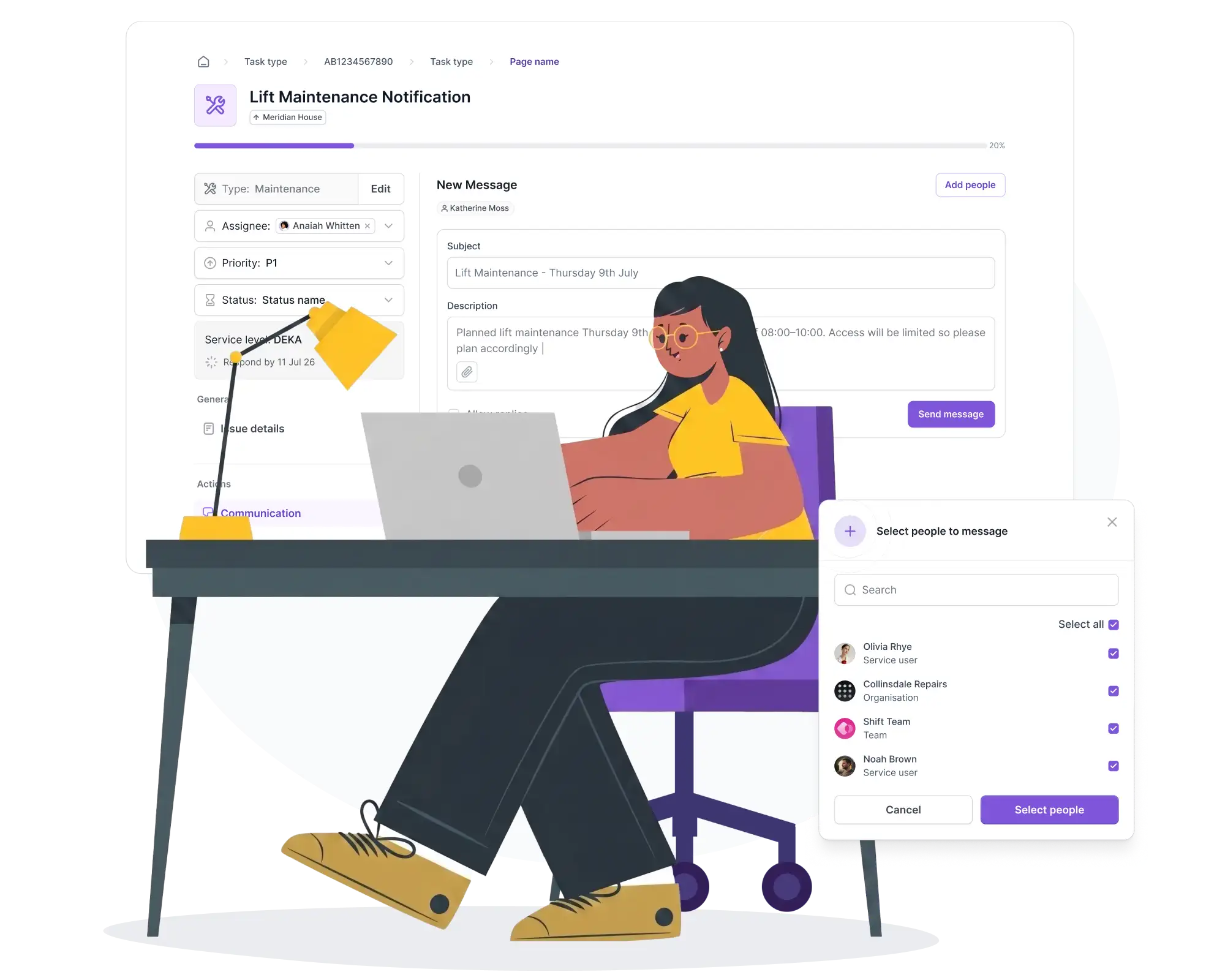
A student reports a fault before their 9am lecture. askporter triages it, books an appointment for a time they've confirmed they're free, and sends a status update while they're on campus. They come back to a job that's already progressing, or already done, with no call needed either way.
A student doesn't know how to use their boiler. Instead of a call to reception, self-help guidance walks them through the reset, referenced to the exact model in their flat. If it doesn't resolve, the issue escalates as a job with the asset already identified, no "which building are you in?" needed.
A student reports patchy WiFi in their block. It's logged, triaged and routed the same way a leak would be, with priority reflecting the impact on study time, not treated as a lesser issue because it isn't a repair in the traditional sense.
Reports triple in the first week of term and again in the run-up to exams. The same triage and SLA engine absorbs the spike, so the team answering messages in week one is the same team running week twenty, not a temp desk stood up twice a year.

It's a fair objection to raise: a student-facing chat interface isn't hard to prototype. What's hard to replicate is the diagnostic accuracy behind it, built on two-plus years of production AI data across real repairs, real compliance documents and real resident conversations, and the ongoing engineering cost of maintaining that in-house once term-time volume hits. An in-house build is a live product your team now owns forever. askporter is a platform that's already handled the peak.
Book 30 minutes with us. Bring your current out-of-hours call log, one contractor SLA, and the week you dreaded most last term. We'll show you what self-service and one system of record look like for your buildings, without adding a member of staff.


Best FM & Housing AI Platform

PropTech Innovation
Best Repairs & Maintenance

UK government-backed · externally audited

UK data residency by default

Documented data processing · DPA on request

AI governance framework · 2024 legislation
Best FM & Housing AI Platform
PropTech Innovation
Best Repairs & Maintenance
UK government-backed · externally audited
UK data residency by default
Documented data processing · DPA on request
AI governance framework · 2024 legislation